Catch the defect.Stop the line.
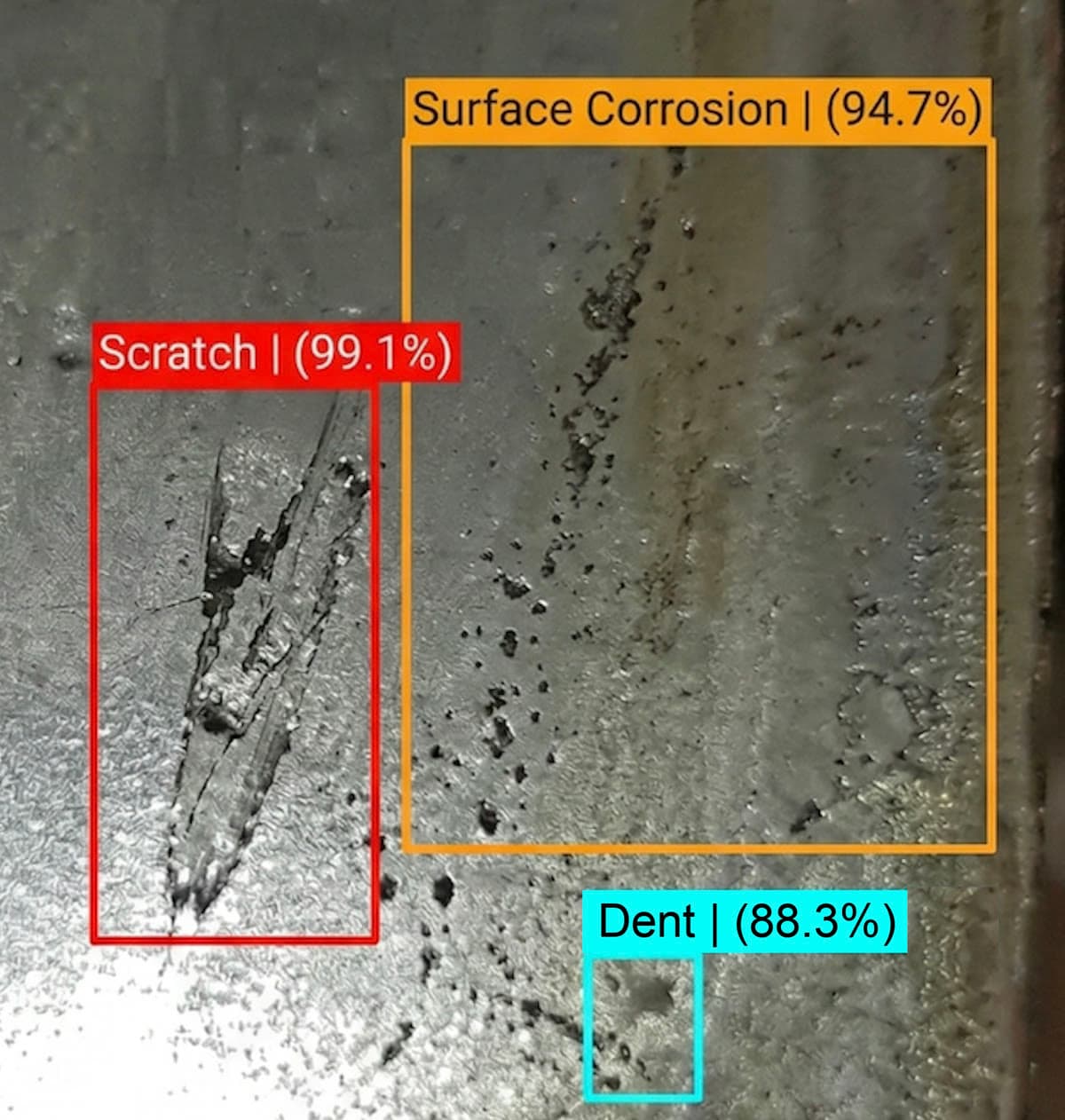
Defects found
0
Detection to PLC command · coil C-40821
- Coil C-40821 on the line · top and bottom facesInspecting
Quasi Inspect checks both faces of every metre of strip at full line speed. It classifies every scratch, pit, sliver and roll mark in milliseconds and commands your PLC to stop, mark, alarm or log before the defect is coiled.
Built for cold rolling, hot strip, galvanizing and coil-processing lines.
Why teams run Atlas
One prevented rejection pays for years of Quasi Inspect.
Escapes stop at the mill.
Critical defects trigger the PLC in milliseconds: stopped, marked and held before dispatch, not discovered on your customer’s press line as a claim.
Every coil sells at its true grade.
A defect map per coil ends precautionary downgrading. Prime sells as prime, and disputes settle on evidence instead of your word against theirs.
AI finds the machine that did it.
Repeating marks are matched to roll circumference and traced to the stand that made them, so the roll changes before a campaign is downgraded.
- Of the surface, both faces. Not sample checks
- 100%
- Inspected at your production line speed
- Full speed
- Detect, classify and command the PLC in milliseconds
- Real-time
- Every shift, every coil. No fatigue, no blinks
- 24/7
From the field
Every coil leaves with its map.
Every defect is pinned to coil, metre and face, with the action taken. The grade and an audit-ready report go straight to SAP QM or your MES.

Coil C-40821IS 513 CR2 · 1250 × 0.80 mm · Heat H-2214 · 2,050 m
Grade: Prime
| # | Defect | Position | Face | Severity | Action taken |
|---|---|---|---|---|---|
| 01 | Scratch, deep | 412 m | Top | Major | Marked · logged |
| 02 | Corrosion cluster | 1,180 m | Top | Major | Marked · logged |
| 03 | Dent, isolated | 1,860 m | Bottom | Minor | Logged only |
Swipe the table for more
How it works
See. Classify. Act. Prove.
See
Vision cameras, up to 16K-resolution line-scan, and lighting over both faces of the strip. We supply and mount the rig on hot or cold lines, with no rebuild.
Classify
Deep-learning AI, trained on steel surfaces and your defect classes, grades every metre by type, size and severity.
Act
The verdict hits your PLC in milliseconds: stop the line, sound the alarm, fire the paint marker, divert, or log. Your rules.
Prove
Every defect pinned to coil, metre and face, with a defect map, grade and audit-ready report straight to SAP QM or MES.
- PLC and line
- OPC-UAModbus TCPPROFINETDigital I/O
- Quality systems
- SAP QMMES L2REST API
What it sees
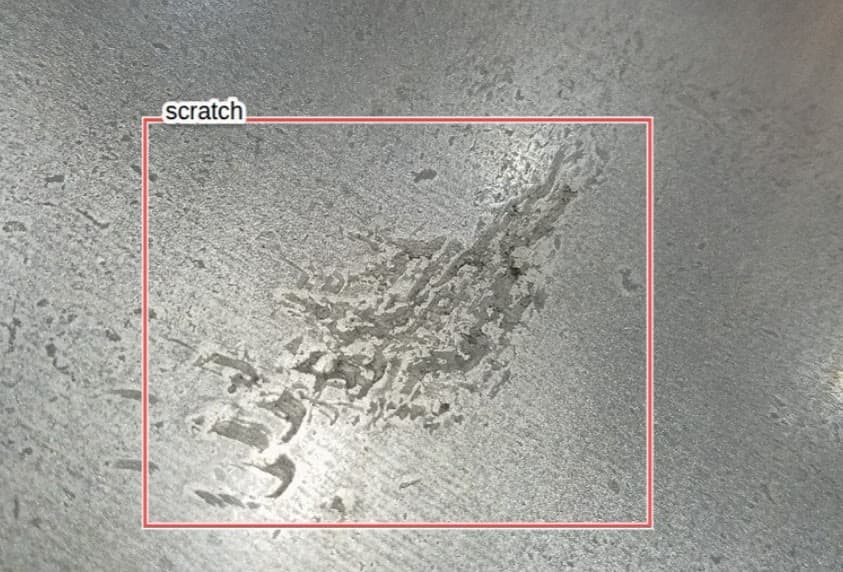
Classifies every defect on your spec.
Deep-learning AI, trained on steel surfaces and your defect classes, grades every metre by type, size and severity.
- Scratches
- Scale & pits
- Roll marks
- Edge cracks
- Slivers & shells
- Inclusions
- Dents
- Pinholes & holes
- Rust & corrosion
- Oil spots & stains
- Coating defects
- Wavy edge & buckle
+ classes we train on your coils
Your rules
Your rules decide what the line does.
From detection to PLC command in milliseconds, by severity.
| Severity | Typical defects | PLC command | What gets recorded |
|---|---|---|---|
| Critical | Hole, deep edge crack, sliver | Stop lineBeacon | Frame, position and heat no. Coil held. |
| Major | Deep scratch, corrosion cluster | AlarmPaint marker | Coil map and alert to the QC in-charge |
| Minor | Light scratch, oil spot, stain | Log only | Coil map and shift summary |
| Repeating | Roll mark at fixed pitch | Roll-change work order | Roll ID and maintenance ticket |
Your rules, per grade, per customer, per line. Change them without stopping the strip.
Where it runs
Where it watches.
Cold rolling & tandem
Roll marks, chatter, scratches and pits at full mill speed, with repeating patterns traced to the offending roll.
Hot strip & plate
Scale pits, slivers, seams and edge cracks caught in hot, harsh environments, on top and bottom faces.
Pickling lines
Under-pickling, residual scale and stains flagged before they roll into the base metal downstream.
Galvanizing & coating
Bare spots, dross inclusions, passivation stains and coating defects caught before dispatch.
Slitting & cut-to-length
Edge cracks and burr at the slitter: the last look before the coil reaches your customer’s door.
Tinplate & finishing
Pinholes, oil spots and stains on high-value thin gauge, where one miss scraps the batch.
Does it run on our existing CCTV?
No. Surface inspection needs dedicated vision cameras and lighting over both faces of the strip, up to 16K-resolution line-scan. We supply and mount the rig on hot or cold lines, with no line rebuild.
Which defects does it classify?
Scratches, scale and pits, roll marks, edge cracks, slivers and shells, inclusions, dents, pinholes and holes, rust and corrosion, oil spots and stains, coating defects, wavy edge and buckle, plus classes we train on your coils.
Can it really stop the line?
Yes. The verdict reaches your PLC in milliseconds: stop the line, sound the alarm, fire the paint marker, divert, or log. You set the rules per grade, per customer and per line, and change them without stopping the strip.
Which systems does it connect to?
OPC-UA, Modbus TCP, PROFINET, digital I/O and REST API on the line, with defect maps and reports going to SAP QM or your MES at level 2.
Does it keep up with our line speed?
Yes. Both faces of every metre are inspected at your production line speed, on every shift and every coil.
What does a pilot look like?
A pilot on one line: we mount the rig over one stand, train the AI on your defect classes and grades, and run in shadow mode beside your inspection crew until the numbers convince you. Then we wire the first PLC command. No long contracts.
Live pilot
Watch it out-catch your best inspector, on your own coils.
A pilot on one line: we mount the rig over one stand, train the AI on your defect classes and grades, and run in shadow mode beside your inspection crew until the numbers convince you. Then we wire the first PLC command. No long contracts.
- Your line
- Your defect classes
- Your PLC
Part of Quasi Atlas.
Every product runs on one platform, one data layer and one console. Start with one and add the next when you are ready.